“Maybe” is No
A Guide to Communities, Consent, and Connection

In the world of dating, intimacy, and sex-positive communities, we’ve all heard the golden rule: "No means no." It’s the foundation of basic human decency. Then came the necessary evolution: "Yes means yes" (or Enthusiastic Consent), which shifted the focus from the absence of a "No" to the presence of an active, excited "Yes."
But as we navigate the nuanced, high-stakes environments of play parties and Ethical Non-Monogamy circles, a gold standard exists that protects everyone's boundaries even more effectively:
"Maybe is No."
At first glance, it may sound strict. You might think, "But I'm actually unsure! I'm not saying no, I'm just thinking about it." However, in practice, treating a "Maybe" as a "No" is one of the most liberating and safety-enhancing tools you can bring to any interaction. Here is why this shift is a game-changer for the scene:
It eliminates the "convincing" culture.
We’ve all been there… someone asks for something, and you hesitate. You say, "I’m not sure," or "Maybe later," or "I’ve never tried that before..."
In a traditional setting, that "Maybe" is often seen as an opening for a negotiation. The other person might try to "sell" you on the idea, reassure you, or gently push until that maybe turns into a reluctant "fine."
On the other hand, treating a maybe as a hard no shuts down the sales pitch. It tells the other person: "Since you aren't a 'Hell Yes,' I am going to stop asking so you can have the space to feel your own feelings without pressure."
It protects the "fawn" response.
Psychology tells us that when people feel pressured or uncomfortable, they don’t always fight or flee. Sometimes, they fawn. Fawning is a trauma response where we try to please the other person to avoid conflict.
A "Maybe" is often a polite way of trying to say no without "ruining the mood." By establishing a culture where Maybe = No, the burden is removed from the person feeling hesitant. They don’t have to find the "perfect" way to reject someone. Their hesitation is respected as a boundary in itself.
It raises the bar for pleasure.
Why settle for a "Maybe" anyway? In sex-positive spaces like Night Owls, the goal isn’t just "tolerated" contact; it’s resonant, enthusiastic connection.
If someone is a "Maybe," they aren't fully present.
If they aren't fully present, the chemistry is lopsided.
By waiting for a "Yes," you ensure that the experience is actually good for both people.
To raise the bar for pleasure, we have to look past a simple "Yes" and understand the Triangle of Consent: Agency, Power, and Communication.
Agency means everyone has the ability to make choices for ourselves. We make those choices based on available information and our own judgment.
Power requires us to be mindful of imbalances, like social status or physical size, that might make a "Maybe" feel forced.
Communication is the verbal bridge that moves us from guessing the vibe to clear, shame-free agreements. It starts with the truth and is strengthened by more detail.
When any of these three legs are missing, consent becomes unstable. By checking for all three, we move from just "following rules" to building a culture of care that protects everyone’s spirit.
It creates a "check-in" requirement.
When you adopt the "Maybe is a No" rule, it changes how you communicate. If someone gives you a lukewarm response, you don't keep pushing. Instead, you say:
"I’m hearing a Maybe, so I’m going to take that as a 'not right now.' If you find yourself feeling like a 'Yes' later, let me know!"
This puts the power back in the other person's hands. It proves you are a safe person to be around because you can handle a lack of "Yes" with grace.
Consent is a living, breathing check-in that can shift at any moment. Whether you are the one proposing an idea or the one responding, remember that a "Yes" from earlier in the night or another day, or even five minutes ago, can always evolve into a "Maybe."
For the person giving consent: You have the absolute right to change your mind. If your "Hell Yes" starts to feel like a "Wait," "Maybe," or "I’m tired," honor that shift. You don’t owe anyone an explanation for protecting your peace.
For the person receiving consent: Stay present and keep "reading the room." If you notice your partner’s energy dip or their enthusiasm soften, don't just lean on their initial "Yes." Check in. Being a safe person means being ready to pivot the moment the vibe changes.
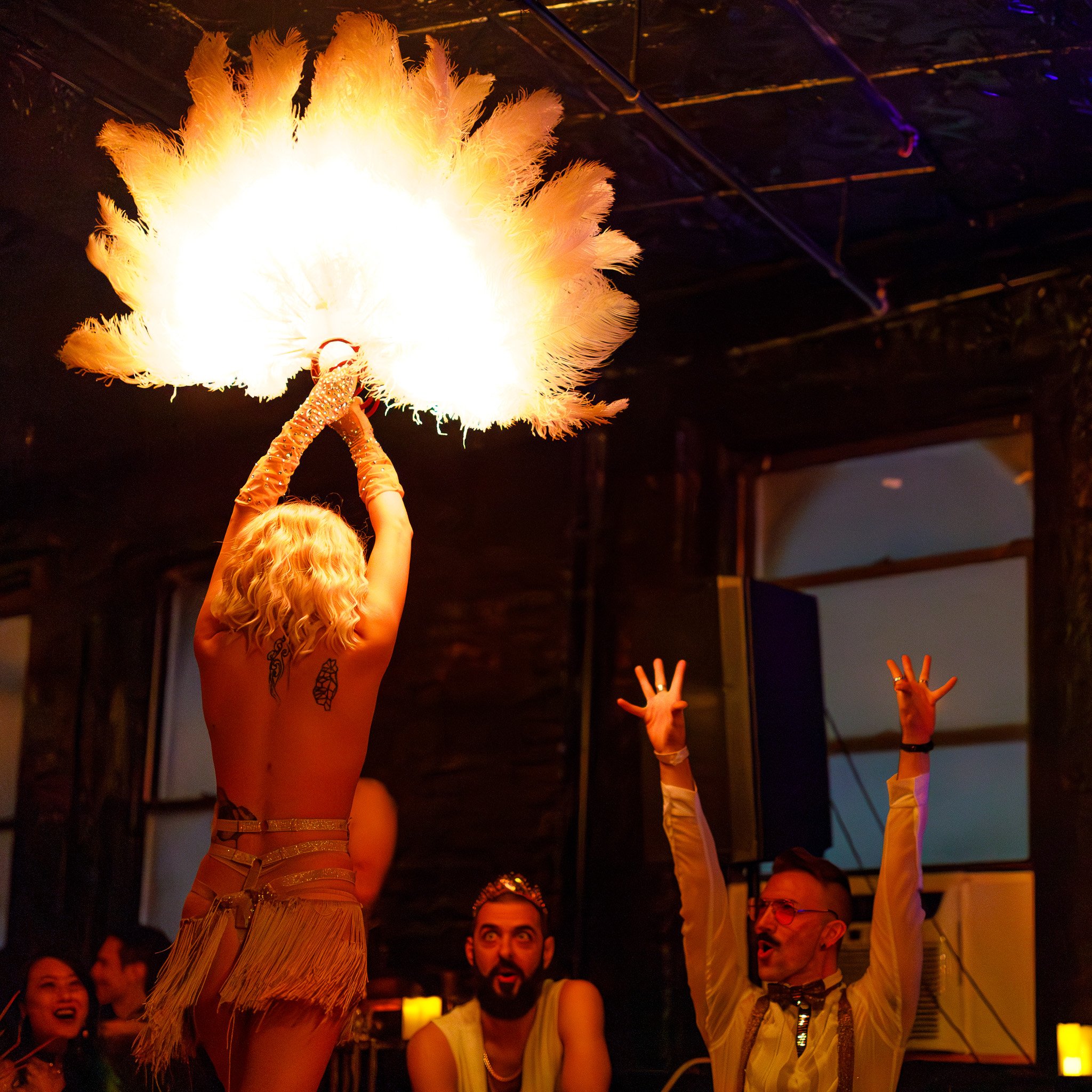
The "step back" creates space, not pressure.
When you hear a "Maybe," the most respectful response isn't just to stop asking, it's to de-escalate your entire approach. If you stay exactly where you are, hovering at the same level of intensity, the pressure is still there, even if it’s just silent.
True consent culture requires you to adjust your energy in real-time:
Don't "double down": If you’ve tried one approach and it got a lukewarm response, do not try a "different version" of the same thing. Stop that line of pursuit entirely.
Check your aggression: Aggression isn't always loud. Sometimes it's a persistent lean-in or a refusal to change the subject. When you hear a maybe, consciously soften, lower your voice, relax your posture, and literally create more physical distance.
The power of the vacuum: Instead of filling the space with more "convincing," create a vacuum. By stepping back and letting the interaction breathe, you allow the other person to feel their own desire.
Let them come to you: The gold standard of a safe person is someone who can take a "not right now" and move on so completely that the other person feels totally comfortable approaching you later. If they want to bridge that gap, they will. If they don’t, you’ve preserved the friendship and vibe.
Mindset shift: A "Maybe" is an invitation to be a better friend, not a better negotiator. When you stop pushing and truly let the person come to you, you aren't "losing", you're building the kind of trust that makes future "hell yeses" possible.
“Door is open”: If you are in a dynamic where the other person is shy or taking a submissive role, clearly communicate that you are stepping back to give them space but that the door remains open should they choose to re-initiate later.
Embrace the power of an abundance mindset.
When you hear a "Maybe" or a "No," the most important thing you can do for the vibe, and for your own ego, is to not take it personally. In the heat of the moment, a rejection can feel like a critique of your character or your attractiveness. But in a truly sex-positive scene, a "no" is often not about you as a person. Many times, it’s about the internal landscape of the other individual. Also…
It might be the "what," not the "who": They might think you’re incredible but simply aren't into that specific activity, that specific kink, or that specific sensation today.
It might be the "when": Maybe they had a draining day at work, maybe they’re feeling socially overstimulated, or maybe they just really need a glass of water and a 20-minute break from being perceived.
It’s a "not right now," not a "never": A "No" in the moment is a boundary for this moment, not a permanent verdict on your future potential.
Remind yourself that the city is millions of people and the scene is overflowing with opportunities. When you approach intimacy with an abundance mindset, a "No" doesn't feel like a door slamming; it feels like a course correction.
Trust that there will always be another conversation, another dance, and another "hell yes" around the corner!
Self reflection:
While you shouldn't spiral over a single "No," if you find yourself consistently receiving "Maybes," use that data as an opportunity for honest self-reflection regarding your energy, approach, or how you are showing up in the space.
While an abundance mindset is helpful, recognize that for those in marginalized or niche "micro-scenes," the dating pool is often a small pond rather than an ocean, making every interaction and boundary feel significantly more weighted.
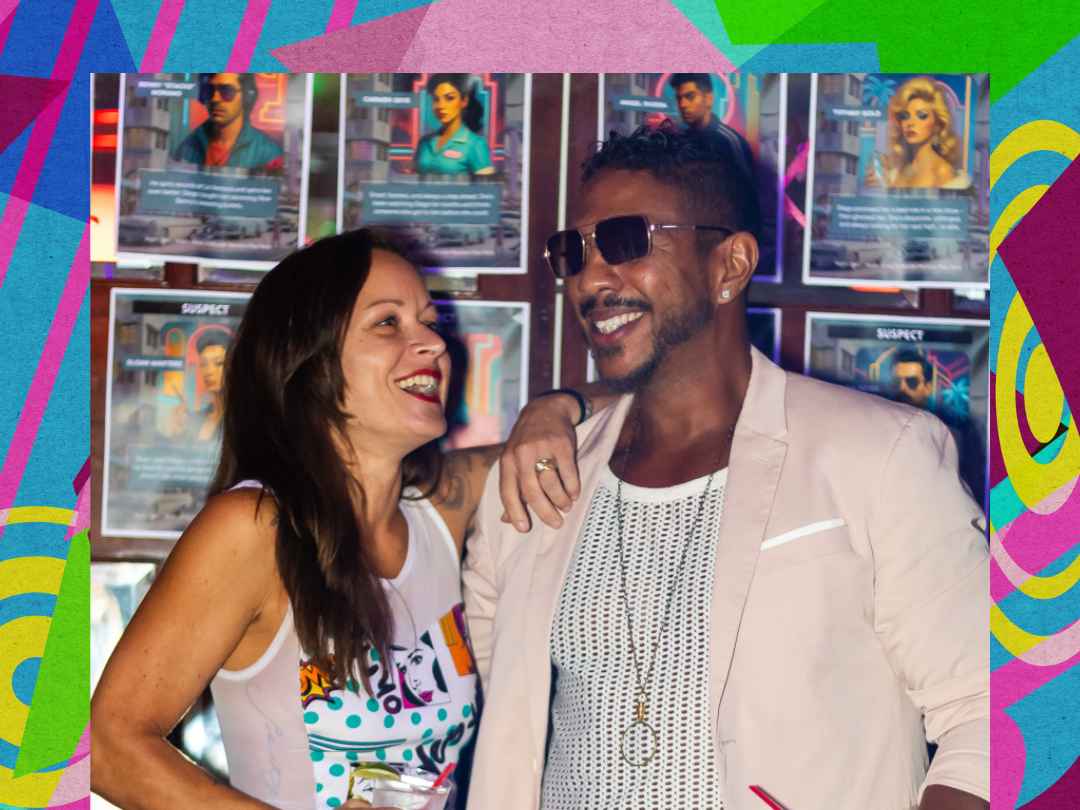
Practice situational empathy by recognizing that you are only one small part of that person's day.
When you approach someone in a sex-positive space, it’s easy to focus entirely on the bubble of your own excitement. But true consent culture requires a high degree of situational empathy. You have to remember that you are likely the tenth, twentieth, or fiftieth person to interact with them that day, and you have no idea what the other forty-nine interactions were like.
The "approached" fatigue: Especially for women, non-binary folks, and high-profile members of the scene, being "on" can be exhausting. They might have spent the last three hours navigating clumsy overtures, managing other people's egos, or simply repeating their boundaries. Your "maybe" might just be the result of social battery depletion.
The invisible backpack: You don’t know what they carried into the room. They might have had a grueling day at the office, a tense conversation with a partner, or a sudden wave of body dysmorphia. Sometimes a "No" is just a person's way of taking care of their own mental health in real-time.
The "not you" reality: When someone is hesitant, it’s often because they are doing the internal work of checking in with themselves. By offering them empathy instead of ego, you acknowledge that their internal world is more important than your immediate desire.
A golden rule of the scene: Treat every "Maybe" as a sign that the other person is practicing excellent self-care. They might just be tired, over-stimulated, or "peopled out". By accepting a "No" with a smile and a genuine "Totally get it, no worries!" you aren't just being polite, you’re signaling emotional security and that you aren't "starving" for validation. This lack of desperation is, ironically, one of the most attractive qualities you can bring to a play party.
Being a safe person in the scene starts with being safe for yourself.
The Duty of Self-Consent: Ignoring your own internal yellow lights is a form of self-betrayal that creates a safety risk for you and the community. Read: Honoring Self-Consent
Performing consent when you aren't feeling it creates relational friction and emotional fallout that affects the integrity of the space. If you feel a "Maybe" in your own body, pause. You don’t need a "good reason" to stop. Honoring your own "Maybe" is the highest form of participation in a sex-positive space.
Practice mindful intoxication by recognizing that substances can blur the internal "yellow lights" of both you and your partner, making it difficult to distinguish a grounded "Yes" from a hesitant "Maybe." Before escalating, take a moment to ensure everyone is still fully present and capable of honoring their own boundaries, as being too intoxicated often silences the very intuition that keeps the community safe.
It is important to clarify that "mindful self-consent" is not a substitute for addressing actual coercion. There is a profound difference between a partner gently inviting you to explore a new boundary and someone actively pressuring, guilt-tripping, or forcing you into an act. This guide is a reminder to tune into your own internal "yellow lights" and practice self-advocacy, but it is never your responsibility to "manage" someone else’s aggressive behavior. If you feel truly forced, unsafe, or unable to say no without consequence, that is a violation of consent, and we encourage you to seek out a Guardian, or a trusted friend immediately. Our goal is to help you honor your intuition, not to suggest that you are at fault for being pressured.
How to Practice This Tonight
If you’re heading out to a mixer or a play party this weekend, try these three steps to integrate the "Maybe is No" philosophy:
Listen for the "Um": If you ask to touch someone or join a conversation and they pause, stutter, or seem hesitant before answering, that is a No. Don't wait for them to verbalize it. Withdraw the request.
Value the hesitation: If someone says "I guess so," or "If you want to," that isn't a yes. That’s a "maybe-leaning-into-compliance." Treat it as a No.
Honor your own Maybe: If you aren't 100% sure you want to do something, don't do it. Recognize that your own uncertainty is your body’s way of saying, "I don't feel safe/ready yet." Read: Honoring Self-Consent
Give the space to be unsure.
"Maybe is No" isn't about being a killjoy, it’s about building trust. When people know that you will stop at the first sign of hesitation, they feel much safer opening up to you.
In a world as fast-paced as today, the greatest luxury we can give each other is the space to be unsure without consequence.
By honoring 'Maybe' as 'No,' we move beyond mere rules and begin to build a true culture of care where we actively look out for one another’s safety and spirit. This is the type of culture that helps make our community a safe home for everyone to enjoy.
Curious to Explore More?
Read: Honoring Self-Consent
Read: Connecting in Digital S*x-Positive Communities
If you're interested in exploring play and connection through a lens of intention, consent, and emotional intelligence, discover Night Owls’ immersive play party series.
Each experience is thoughtfully curated to support safety, connection, and meaningful exploration.
Night Owls is a curated community creating immersive nightlife experiences in New York City, centered on consent, creativity, and human connection.